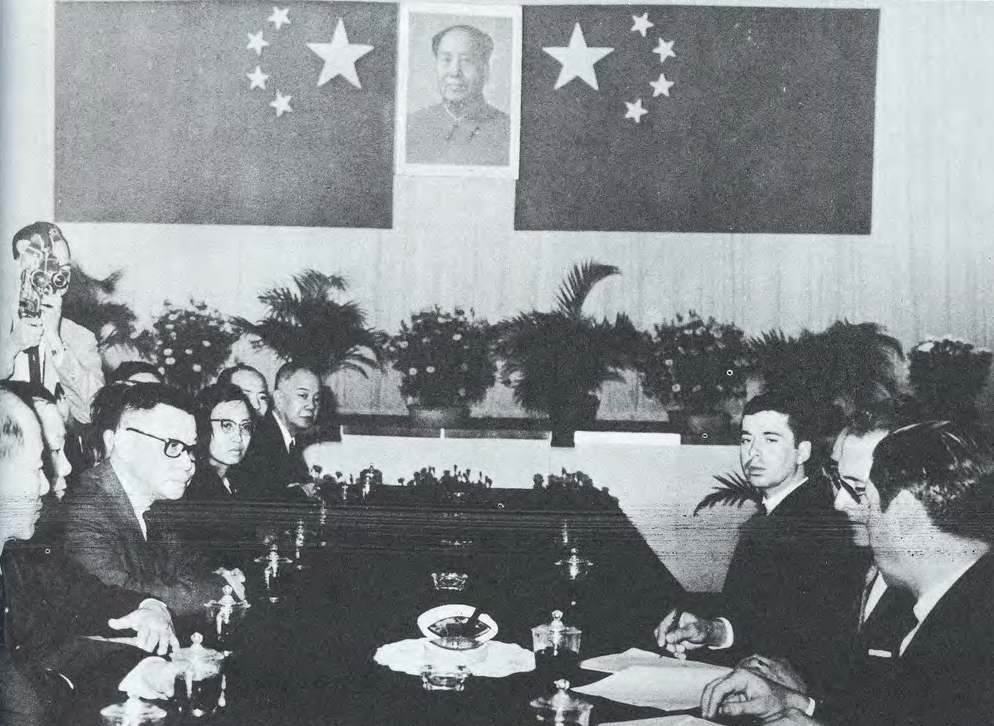
On January 29, 1967, Chinese delegates met with representatives from Lisbon and Governor Nobre de Carvalho. The governor issued a formal apology for the violence and conceded to the demands of Macau residents on behalf of the Portuguese government. Whether it was sincere or a strategy for political appeasement, the public apology indicated that the violence was not justifiable by global standards, which marks a noteworthy change in Portugal’s colonial capabilities.
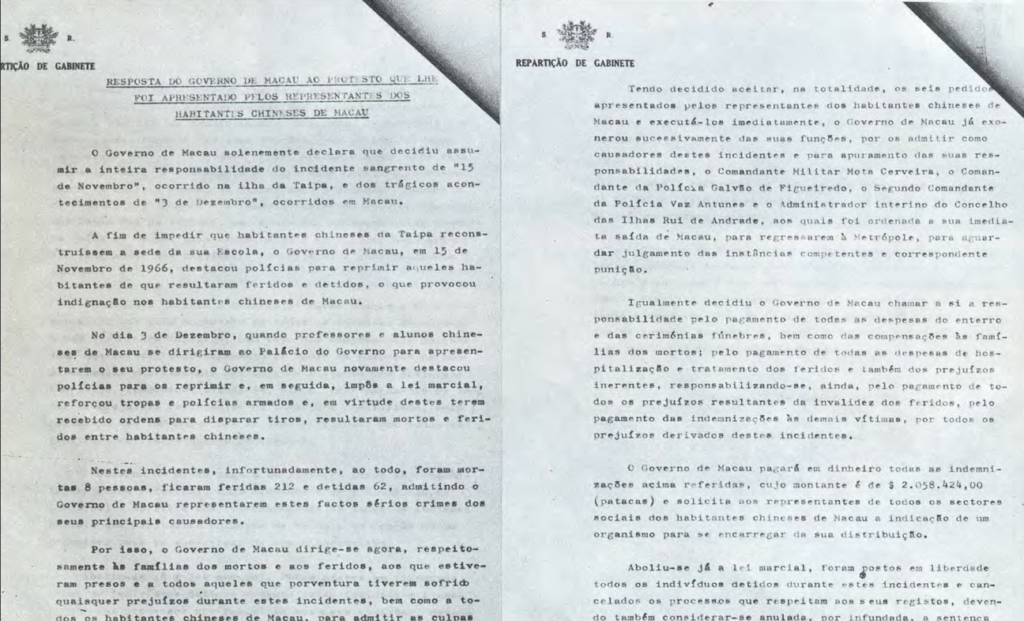
For two months between the 123 Incident and the meeting, the governor corresponded several times with officials in Portugal. In the governor’s apology, he deflects blame off himself or even Lisbon: “the Government of Macau solemnly declares that it has decided to assume full responsibility for the bloody incident of November 15th” (Fernandes 2000, 677). Instead, he placed it on the government of Macau as an entity. He even softened the responsibility of the PSP themselves, stating that they were simply taking orders, and later pinpoint specific individuals in leadership positions that were to be held accountable.
However, the governor did express remorse for those who were injured and killed on behalf of the government and agreed to pay for all funeral costs, hospitalization expenses and damages. Macau residents were to be in charge of organizing the distribution of payments. In the end, the governor made a claim for the future, promising that safety would be guaranteed moving forward. Such promises imply a sense of denial about the state of Portugal’s sovereignty over Macau. The empire was weakening, but the Portuguese seemed hesitant to admit it completely.