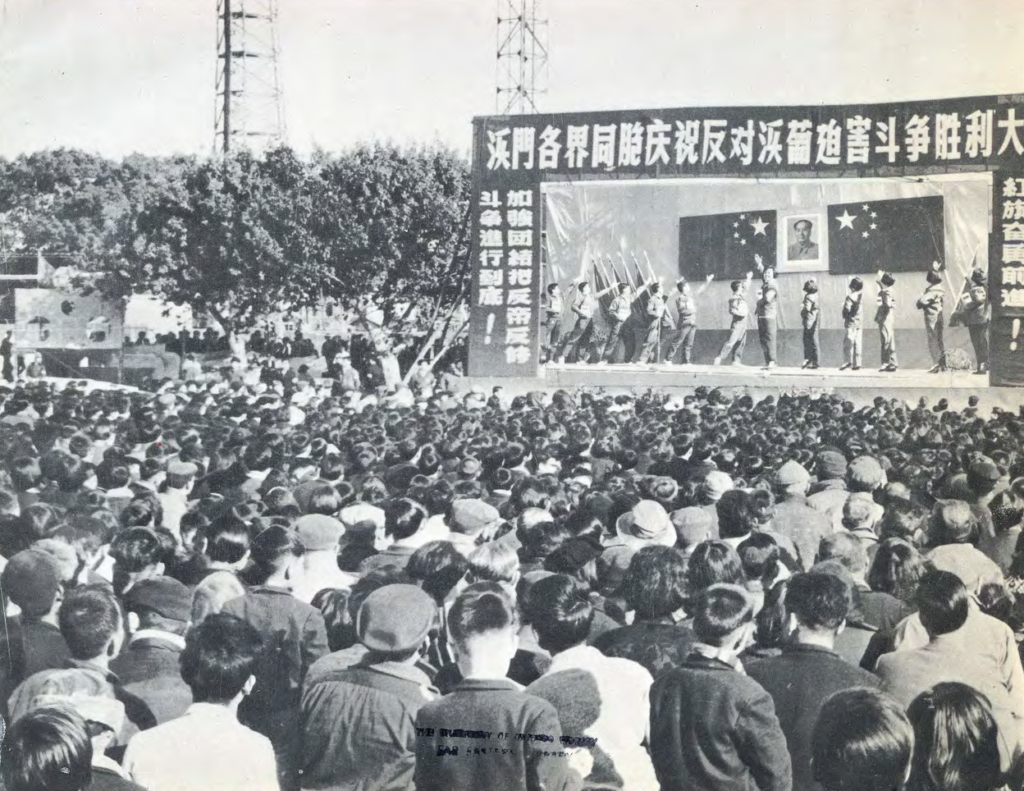
In a daily report dated December 1, 1966 for the Foreign Broadcast Information Service (FBIS), meetings held in response to the violent occurrences on Taipa Island were concisely described by the New China News Agency (NCNA). This report would be one of many during this time period, showcasing the dissatisfaction with Portuguese colonial rule during a period of global decolonization and communist insurgency in Asia.

The Chinese wrote about the Incident with antagonism towards the Portuguese and much sympathy for Macau people. They used terms like “brutal persecution,” “crimes,” “shedding blood,” “wounded,” “severe beatings,” and “armed” to negatively characterize Portuguese authorities specifically rather than the PSP (FBIS 1966). Meanwhile, they referred to the Macau people as compatriots, establishing a unifying identity among Chinese communists in the region. Thus, the Incident was part of a larger ideological struggle between capitalism in the West and communism in the East. Furthermore, these reports were often originally published in Hong Kong, another European colony, framing these Macanese-Portuguese tensions within the greater decolonization effort in Asia.